The building keeps working. So does the crew up top.
Repairs for metal-skinned shops, equipment buildings and agricultural buildings around Center Hill: weeping penetrations, cracked skylight panels and tired steel that a white coating can carry for years more, all scheduled so your doors stay open.
Tracing
Where water gets into a metal-skinned building first.
A working building usually has a plain roof: corrugated or ribbed panels screwed down to purlins, a few clear panels for daylight, and a run of pipes and units poking through. Plain does not mean leak-free. On a lot of the commercial calls we take, the water is coming in at a hole somebody cut on purpose.
Pipe penetrations are the usual suspect. A boot that was sealed tight when the vent went in has since spent years in the sun, so the rubber hardens and splits and the sealant shrinks back from the ribs. Rooftop equipment curbs come next. Every unit sits on a frame that interrupts the panel run, and the flashing around that frame takes the runoff from the whole slope above it.
After those, we look at the screws along the side laps and the panel ends hanging over the eave. Around Center Hill the land is open, and wind that crosses it drives rain sideways into any lap or trim piece that has worked loose. We walk the roof, follow the stains inside back to where they start, and photograph each entry point before anyone talks about the fix.
Clear panels let daylight into a shop or equipment building, and they age faster than the steel around them.
The plastic yellows, turns brittle and starts to crack, often along the fastener lines where it flexes in a gust. From the floor a panel can look whole and still let water run along a hairline split. Sealant buys very little time once that starts, so a cracked skylight panel normally comes out and a new one goes in, cut to match the profile of the steel beside it.
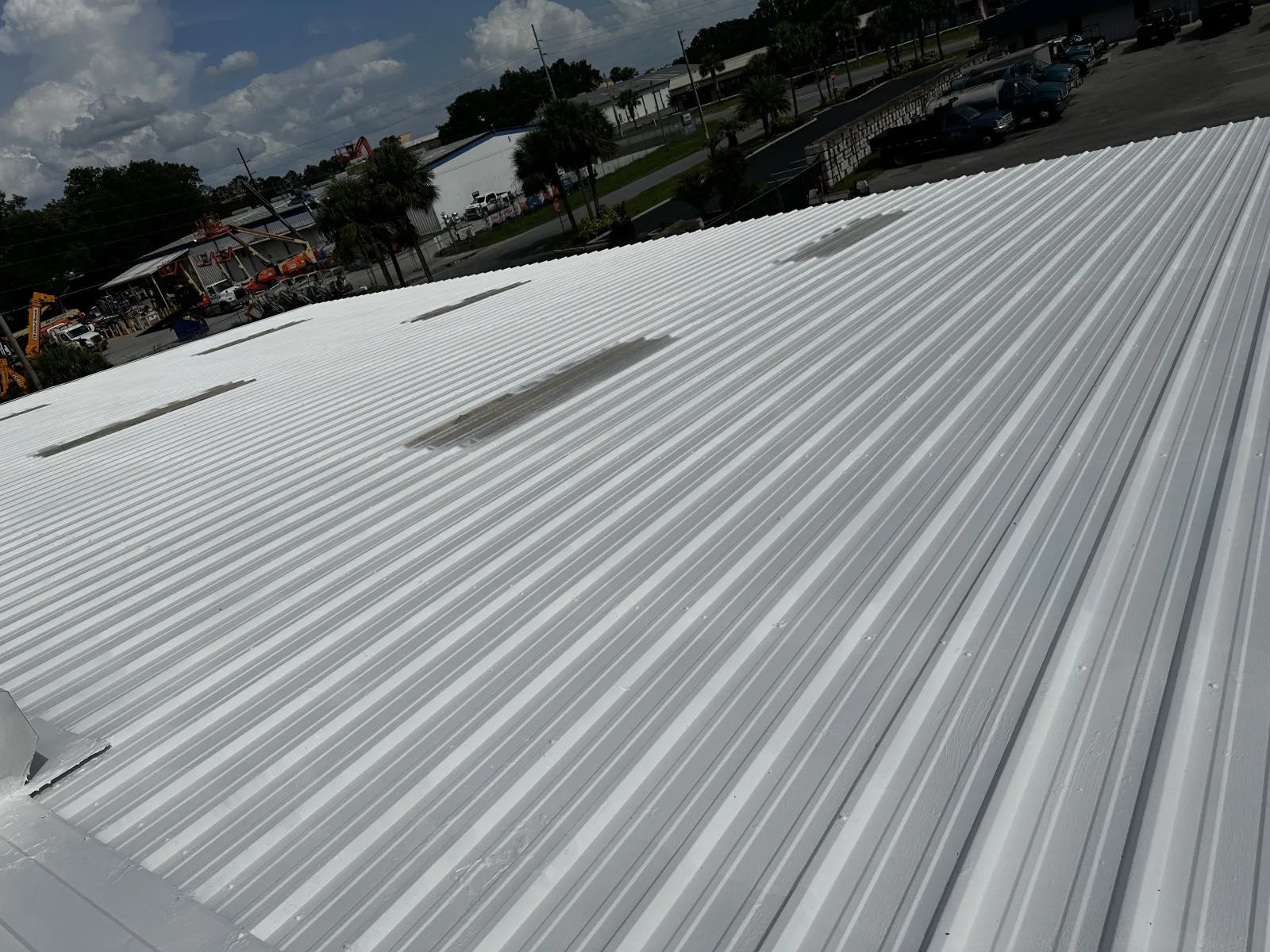
The photo here shows the other detail these roofs live or die by: a row of pipe penetrations, each one cleaned, sealed and then coated white along with the field of the roof, rooftop units at the far edge. Sealed in like that, a penetration becomes part of one surface instead of a separate patch waiting to fail.
Plenty of working buildings out here share a property with a house. If yours does, one trip can cover both, and our pages on metal roof repair for Center Hill homes and shingle roof repair around Center Hill explain what we look for on the residential side.

Coating
When a white coating is the right repair for tired steel.
Coating is a repair strategy for a metal roof that is still structurally sound. On one that is not, it only covers the trouble, so the roof gets checked before anything is sprayed or rolled.
- Steel first. Rust that has only stained the surface can be cleaned and coated. Rust that has eaten through a panel means that panel gets replaced before any coating goes on.
- Fasteners. Stripped, loose or weeping screws get replaced, because a coating cannot hold down a screw that is backing out.
- Penetrations sealed in. Pipes, vents and curb flashing are sealed, then coated with the rest of the field, the way the photo above shows.
- Laps and seams. Side laps and end laps are reinforced before the full coat, since that is where the panels move and open up.
- Skylights left clear. Translucent panels are replaced or kept as they are. We never paint over them.
- White on top. A light finish reflects summer sun, which matters on a metal building with no ceiling between the roof and the people working under it.
Coating, panel work or a full replacement gets decided on the roof and put in writing with photos of what drove the call. Many buildings end up with a mix: new panels where the steel has failed and a coating over everything else.
Commercial roofing services · Commercial roof repair across our area · New roofs for Center Hill homes · Coated metal roofs in the gallery
Repair days planned around a business that cannot close.
Owners of working buildings tend to say the same thing at the first visit: the leak has to stop, but the work inside cannot. So before a crew climbs up, we ask when the building is busiest, where people and equipment sit under the roof, and which doors and drives the trucks need.
From there the job gets broken into sections. Penetrations over a busy work area can be scheduled for hours when that part of the building sits empty, and material gets staged where it will not block a bay door. When water needs to be shut out of a spot fast, a temporary seal goes on first and the finished repair follows on a planned day.
Weather sets the other half of the schedule. Summer afternoons bring wind and lightning, so coating and sealing get done in the morning hours and no section is left open overnight.
Being close helps too. A second short visit to finish one corner of the roof costs nobody a lost day, and splitting the work that way is often what lets a business keep running straight through it.
A commercial repair visit, start to finish.
Whatever the building is used for, a repair job follows these five steps in this order.
Walk
Roof and interior walked, every stain traced to the panel or detail that lets water in.
Photograph
Each entry point photographed, so you see the problem before you see a price.
Scope
A written plan: repair, new panels, coating or a mix, on dates that fit your hours.
Repair
Work done in sections, material kept away from doors, the roof closed up daily.
Review
We walk the finished details with you and leave the yard and lot clean.
Close enough to come back for the small stuff.
Center Hill sits a short drive east of our Bushnell shop. For a building owner, that means a slipped fastener or a weeping boot does not have to wait until it is part of a big job to be worth the trip.
When a repair calls for a permit, we file it through the Sumter County Building Division and handle the inspection. The owner picks up his own phone, which helps when a question comes up while your business is open and you cannot stop to chase anyone down.
Our Center Hill page · Manufactured home roof repair nearby · Reach the owner
What building owners around Center Hill ask before we climb up.
Can you repair the roof while we stay open?
In most cases, yes. We split the job into sections, work over empty parts of the building when we can, keep bay doors and drives clear and close the roof up before we leave each day. Tell us your busy hours at the first visit and the schedule gets written around them.
Is coating a metal roof a real repair or just paint?
Done properly, it is a repair. Loose fasteners get replaced, rusted-through panels get swapped, laps and penetrations get sealed, and only then does the white coating go on as one continuous surface. Painting over a roof that still has those problems would only hide them for a season or two.
Why does the stain show up nowhere near the pipe that is leaking?
Water that slips past a penetration usually travels along the underside of a panel or down a purlin before it drips. On a long metal building that can put the stain well away from its source. That is why we trace it from the roof down, then confirm the path from inside.
Should cracked skylight panels be sealed or replaced?
Replaced, nearly every time. Once a translucent panel has yellowed and gone brittle, sealant over one crack does nothing to stop the next one opening beside it. A new panel cut to the same profile as the steel around it ends the leak and lets the daylight back in.
How quickly can you look at a commercial leak in Center Hill?
Our shop is in Bushnell, and Center Hill is about fifteen minutes east of it. Call the owner, tell him where the water is getting in and what sits under it, and he will put you on the soonest visit the schedule allows.
Do you need to see the inside of the building too?
Yes, whenever we can. Stains on insulation, drips onto equipment and daylight showing along a seam all point us to the right spot on the roof. A walk inside takes a few minutes and keeps us from repairing a detail that was never the problem.
Show us where the water is getting in.
Call the owner, or leave the details here and we will set up a free roof check on your building around the hours you keep. You can also send a note from the contact page or look through commercial work in the gallery first.
(352) 457-4472Building roof details
Metal panels or something else, roughly how big, where the drips show up. The owner reads each one himself.