
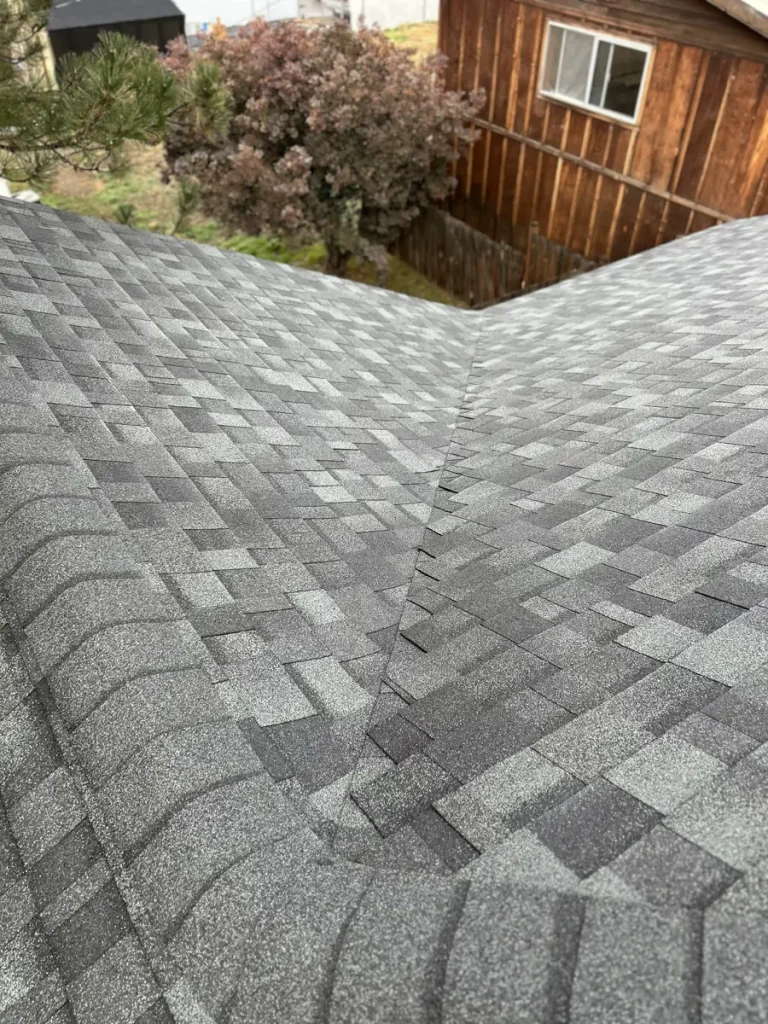
By the time a storm has a name, every roofer’s schedule is full, every tarp in three counties is sold, and the supply houses are quoting delivery dates instead of prices. The preparation window is now, on a clear day when nothing is coming. Here is the pre-season routine we recommend to every homeowner across our counties, and the reasons behind each piece of it.
The five-point pre-season check
First, sealed tabs. Shingle wind resistance lives in the sealant strips, and after fifteen Florida summers those strips let go quietly. A tab that lifts to gentle hand pressure on a calm day is a tab that leaves in a gust. Second, flashing: fastened, tight and sealed at chimneys, vents and walls, because storms exploit the transitions first. Third, gutters clear enough to move serious water; a clogged gutter in a tropical downpour sends sheets of water behind the fascia and into the soffit. Fourth, limbs cut back off the roof line, since the branch that scrapes in a breeze becomes a battering ram in a named storm. Fifth, attic ventilation working as designed, because a heat-cooked mat is a brittle mat, and brittle mats shed shingles in wind that healthy roofs shrug off.
Small repairs now beat big claims later
A lifted shingle is a twenty-minute fix in May and a living-room ceiling in September. Wind is patient and mechanical: it gets a fingernail under one loose edge, works it for an hour, and unzips the slope from there. The nail pop that costs almost nothing to reset today is the entry point for the wind that takes twenty squares tomorrow. This is exactly what our repair work exists for, and pre-season is the season to use it. The homeowners who call us in April and May spend the least money per year on their roofs of anyone we serve. That is not a sales line; it is just how the physics and the pricing work.
Document your roof while it is healthy
Here is the step almost everyone skips: photograph your roof when nothing is wrong with it. Walk the yard and shoot every slope on a clear day, date-stamped, once a year. If a storm hits, those before pictures turn every insurance conversation in your favor, because the difference between pre-existing wear and fresh storm damage stops being a debate. Pair them with a written inspection report, which is free, and your claim file is half-built before any storm exists.
Know your policy before you need it
Read the wind portion of your homeowner’s policy in June, not in the dark by phone light in September. Know your hurricane deductible, which is usually a percentage of dwelling coverage rather than a flat number, and know what that percentage means in dollars. Check whether your policy pays replacement cost or actual cash value on the roof, because on an older roof that single line changes everything about what a claim is worth. If the answers surprise you, your agent has options and pre-season is when you can still exercise them.
The supply-and-schedule reality
After a serious storm, demand for materials and crews spikes across the whole region at once. Prices firm up, lead times stretch, and the best local crews book out fast, which is precisely when the out-of-town operators fill the vacuum. Every repair you move to the calm season is a repair done at normal prices, on normal lead times, by crews you can vet. It is also one less thing exposed when the wind arrives.
Gutters, soffits and the path water takes
Storm prep conversations fixate on shingles, but the water path below the roof line decides how much damage a storm gets to do. Gutters packed with oak litter overflow backward into the fascia; soffit panels loosened by last year’s wind become the opening this year’s wind exploits; and downspouts that dump against the foundation turn a roof problem into a slab problem. Ten minutes with a hose before the season, watching where water actually goes, tells you more than any brochure. Our gutter cleaning crews are roofers, so while the gutters get cleared, the eaves get looked at by someone who knows what a failing edge looks like.
The two-year plan beats the panic buy
If your roof is old enough that this might be its last season or two, the smartest storm prep is a decision made early. A roof replaced on your schedule, in the dry months, at normal prices, with your choice of materials, costs meaningfully less than the same roof bought in the post-storm scramble with a tarp flapping overhead. We put replacement plans in writing all the time with no deposit and no obligation: this year it needs these two repairs, next year budget for the field, here is the number to plan around. Homeowners with that paper in a drawer sleep better in August than anyone else we serve.
Manufactured homes: two extra steps
If your home has low-slope or membrane sections, add two items to the pre-season list: check every membrane termination and edge bar for lift, and confirm the strapping and edge securement meet the current wind standard, because edges are where manufactured-home roofs lose storms. Our manufactured home crew folds both checks into the same free visit.
What to have ready when a storm is coming
Keep a simple kit: your insurance policy number and agent contact, our number saved in your phone, your roof photos backed up somewhere off the property, and inside the house, a couple of buckets and old towels where you can find them in the dark. If a storm is named and inbound, do not get on the roof to prepare anything; the window for roof work is closed at that point. Secure the yard, brace the garage door if it is the old style, and let the roof do the job you maintained it to do.
Why June feels quiet and why that is misleading
Hurricane season officially opens June first, but Central Florida’s early summer often passes gently, and the quiet is exactly what makes it dangerous: preparation energy fades right as the statistical heart of the season approaches in late August and September. The habit that beats complacency is calendar-based, not weather-based. Put the roof check on the same week every May, the gutter clearing on the first of June, the photo walk on the Fourth of July weekend when you are in the yard anyway, and the policy review with your renewal. Sumter County has been grazed and missed enough years in a row that plenty of roofs here have never taken a direct test, which means their weak points are still theoretical, undocumented and unpriced. The season the test finally comes is the wrong season to find out what it would have cost to be ready. Boring, scheduled preparation is the entire trick, and it is cheap.
After it passes: the first-hour playbook
When the weather clears, stay off the roof, photograph everything from the ground, get a real tarp on anything open, and be slow to sign anything on the driveway. We keep commercial-grade tarping and full storm restoration running through every event, and the calls we can handle fastest are the ones from homeowners whose roofs we already know from a pre-season check.
Get on the calendar while it is quiet
The free pre-season roof check takes about an hour, comes back with photos and a written answer, and turns storm season from a gamble into a plan. We run them across the whole hundred-mile circle around Bushnell. Call the owner at (352) 457-4472 or book online, and put the calm season to work for your roof. The check takes about an hour, the photos and the written plan are yours to keep whatever you decide, and the crew that walks your roof in May is the same one that will answer the phone when the radar map turns ugly in September.