
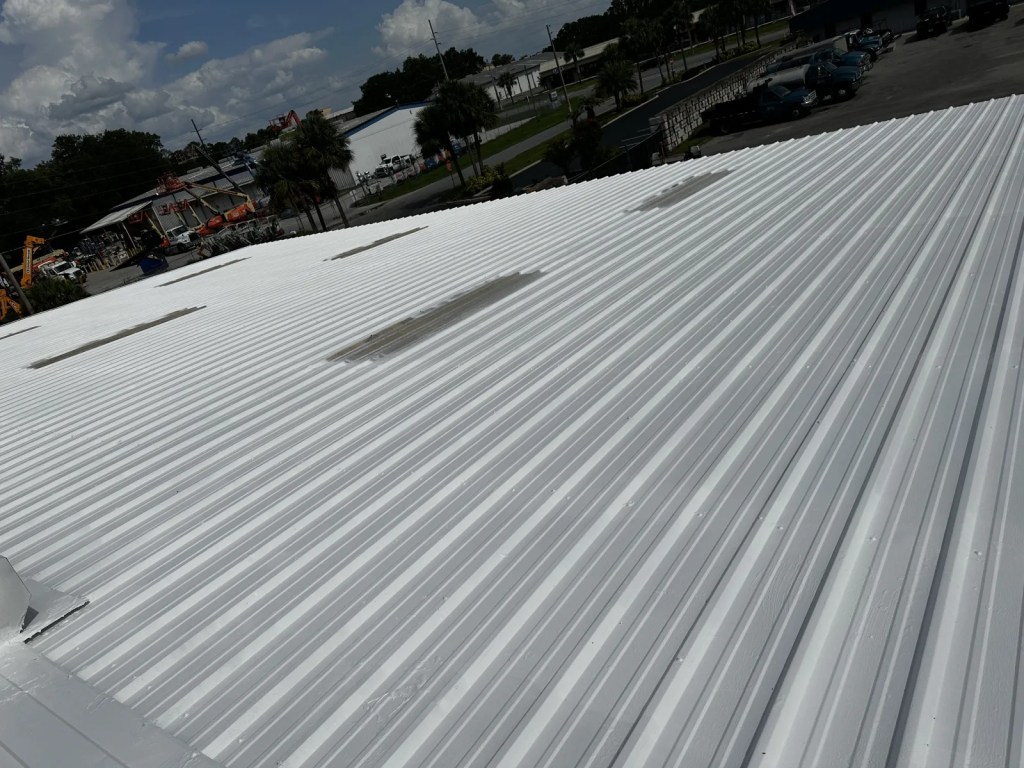
We install both metal and shingle roofs every month of the year, so we have no horse in this race and no reason to steer you either way. What we do have is the math from hundreds of Sumter County roofs, and it is simpler than the sales pitches make it sound. Shingles cost less on day one. Metal costs less per year you actually own it. Which one wins depends almost entirely on how long you plan to be under that roof.
The up-front numbers, honestly framed
A quality architectural shingle roof is the affordable, proven choice, and it is still what most Bushnell homes wear. Metal typically runs meaningfully more up front for the same house, depending on panel profile and roof complexity. That gap is real money, and pretending otherwise is how homeowners end up distrusting roofers. If the budget conversation starts and ends at the install price, shingles win and there is nothing wrong with that answer.
But the install price is not the cost of the roof. The cost of the roof is what you pay divided by the years it protects you, plus what it does to your bills and your insurance along the way. That is where the math turns.
Lifespan: the number that changes everything
In our climate, an architectural shingle roof gives you twenty to thirty years when it is installed to code and ventilated properly. A metal roof gives you forty to seventy. Run the division and metal is frequently the cheaper roof per year of service, sometimes by a wide margin, even before you count the second shingle roof you will buy in the same window. A homeowner who stays thirty years buys one metal roof or two shingle roofs. That single sentence is most of the decision.
What metal does to a cooling bill
Dark shingles absorb heat and feed it into your attic all afternoon. Metal reflects a large share of it, and the difference shows up on summer electric bills. Homeowners who switch tell us the second floor stops fighting the thermostat in July. It is not a gimmick number; over a Florida roof’s life, cooling savings are real money that shingles never give back.
Wind, storms and the insurance conversation
Wind is where metal earns its reputation. Properly fastened standing-seam panels hold through gusts that peel shingle tabs, and after every named storm our storm damage calendar fills with shingle roofs, not metal ones. Florida carriers know this too. Many offer better terms on metal, and adjusters treat a new metal roof very differently from a fifteen-year-old shingle field at renewal time. Ask your agent what each roof does to your premium before you decide; the answer sometimes closes the price gap on its own.
What your roof deck thinks about all this
One factor gets skipped in every driveway sales pitch: the deck under the roof. Metal panels are lighter per square than most people assume, lighter than a double layer of shingles in many cases, so the switch rarely demands structural work on a healthy house. But a deck softened by years of slow leaking changes both quotes. Shingles need solid nailing surface everywhere; metal needs flat, sound decking for its clip lines. We probe the deck from the attic on every quote, price any sheet replacement per sheet in writing before work starts, and nobody discovers a surprise on tear-off day. Ask whoever is quoting you how they price bad decking; a shrug there is a blank check you are signing.
Where shingles genuinely win
Shingles are not the consolation prize. They win on up-front cost, they win on repairability, and they win on looks for a lot of homes. A damaged shingle section can be repaired without touching the rest of the roof, and matching a common architectural line years later is straightforward. The lines we install carry strong wind ratings and clean dimensional looks, and on a home you plan to sell within a decade, a fresh architectural roof is money well spent that buyers can see from the street.
Shingles also make sense when the honest answer is that the budget is the budget. A code-correct shingle roof installed well beats a metal roof you had to cut corners to afford, every single time.
Where metal wins without argument
If this is the house you are staying in, metal usually wins the long math. If the house is near open pasture or lake wind, metal’s grip matters more. If you are tired of buying roofs, metal is the last one most homeowners ever purchase. And around Bushnell there are no HOA restrictions standing between you and it, which is not true everywhere in Florida.
Metal also handles our manufactured and low-slope sections better than shingle ever will, which is why so much of our manufactured home work ends up in metal and membrane rather than shingle.
Noise, looks and the other myths
The rain-noise question comes up on every metal quote, and the honest answer is that a modern metal roof over solid decking and underlayment is no louder than shingle. The barn-roof drumming people remember comes from open-frame metal with nothing underneath it, which is not how a house gets roofed. As for looks, standing-seam has quietly become the premium look in Florida neighborhoods, and rib panels in a good color read as intentional, not agricultural. We have put metal on everything from farmhouses outside Center Hill to newer builds near The Villages, and it has never once been the reason a house sat on the market.
The myth that runs the other way is that shingles are fragile. They are not; a code-correct architectural install with six nails per shingle and proper starter courses is a legitimately tough roof. Most shingle failures we see trace to installation shortcuts, not the product. Which brings up the point that matters more than the material.
Installation quality decides more than material does
A mediocre crew can ruin either roof. Wrong nail placement voids shingle wind ratings. Skipped underlayment turns a metal roof’s forty years into a leak hunt. Fastener torque, panel expansion allowance, valley metal, drip edge, boot quality: every one of these is invisible from the street and decisive in year ten. Whichever material you pick, the questions that protect you are the same: who exactly is installing it, what does the written scope include, and who signs the workmanship warranty. Our answer is our own crew, a line-item scope, and a 10-year labor warranty registered in writing on both products.
The questions that settle it
How long will you own this house? What does your insurer say about each option? How does your attic ventilation look today? Is the framing happy to carry the roof you want? Those four questions, answered honestly, settle metal versus shingle for almost everyone. We walk through all four on every quote, and we put both numbers side by side in writing so you can decide at your kitchen table instead of on your driveway with a salesman watching.
A word on timing the decision
The worst time to choose between metal and shingle is with a tarp on the roof and a storm season half over, because urgency always votes for whatever is fastest. If your current roof is in its mid-teens, run this comparison now, while it is still a planning question. You get to order materials on schedule instead of scrambling, pick the season the crew works in, and give your insurance carrier the answer before renewal instead of after a claim. Homeowners who decide two years ahead of the failure consistently get better roofs for better money than homeowners deciding the week after a leak, whichever material they land on.
Get both numbers for your actual roof
Generic comparisons only go so far, because the answer lives on your specific roof: its pitch, its complexity, its deck, its attic. The roof check is free, the numbers are written and itemized, and nobody follows you around your kitchen afterward. Browse recent metal and shingle projects, then call the owner at (352) 457-4472 or send a few details and we will run your math both ways.