
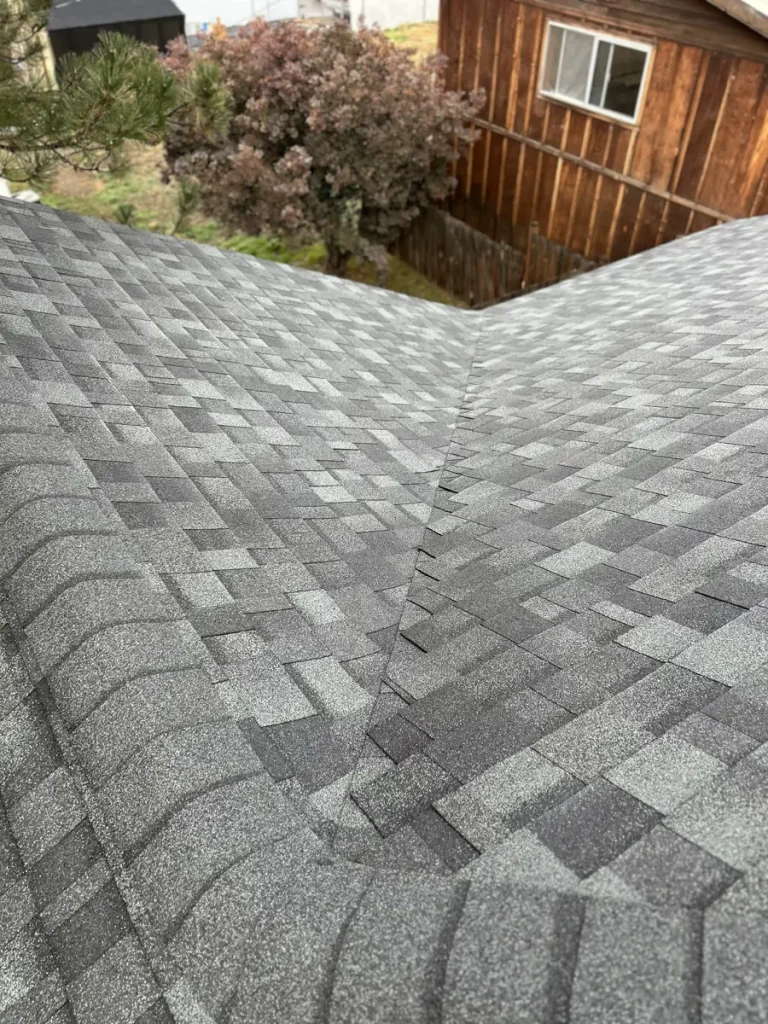
The home inspection said the roof “appears serviceable.” The four-point your insurance carrier wanted says it exists and is not actively leaking. Neither one told you that the roof is a $14,000 problem wearing a nice bed of architectural shingles, and neither inspector set foot on it. If you are buying a home anywhere around Bushnell, The Villages, or the counties we cover, the roof deserves its own inspection before you sign, and here is exactly why.
What a general home inspection actually covers
General inspectors are generalists by design, and most inspect roofs from the ladder line, the ground, or a drone photo. That vantage point catches missing shingles and obvious sag, and almost nothing else. It does not catch brittle mats that crumble at a touch, sealant strips that let go years ago, step flashing rusted paper-thin behind the siding line, or a deck that flexes underfoot because a slow leak has been softening it for five summers. Roofs fail at details, and details need hands on them.
This is not a knock on home inspectors; they have an entire house to cover in a morning. It is a scope problem. The single most expensive component of the house gets a visual once-over while the outlets each get individually tested.
The insurance problem nobody mentions at the open house
Florida carriers have turned roof age into a gatekeeping question. Depending on the carrier, a shingle roof past fifteen years can mean a declined binder, an inspection demand, or a forced replacement timeline written into your policy as a condition of coverage. Buyers discover this after the contract is signed and the clock is running, which is the worst possible moment to learn the roof’s real age.
And “real age” is the operative phrase. Sellers frequently do not know it, listing agents round it down, and permit records only capture work that was permitted. We regularly inspect “ten-year-old” roofs whose materials stopped being manufactured eighteen years ago. Documentation with photos, from a licensed roofing contractor, is what answers a carrier, and it is what you want in hand before you commit.
What a roofer’s inspection finds that nobody else will
On a pre-purchase roof check we walk every slope and put hands on the details: shingle mat flexibility, sealant strip grip, fastener back-out, flashing condition at every penetration, valley metal, drip edge, soffit and fascia. In the attic we read the deck from below: water tracks, rusted nail tips, delaminating sheathing, and the ventilation picture that decides how fast this roof ages from here. Then we photograph all of it and write it down.
The finding is not always bad news, by the way. Plenty of times the report says the roof has eight honest years left and needs two hundred dollars of boot replacements. That is worth knowing too, because it takes the roof off your negotiating worry list and off your carrier’s radar.
Reading the seller’s disclosure like a roofer
Florida’s disclosure forms ask sellers what they know, and “unknown” is a perfectly legal answer that tells you nothing. When the disclosure does say something, read it the way we do. “Roof repaired 2021” means somebody touched it; it does not say who, why, or whether the cause was fixed or painted over. “No known leaks” from an owner who bought the place two years ago carries less weight than the same words from the family that built it. And a fresh interior paint job in one upstairs room, mentioned nowhere, is worth a flashlight in the attic above it. None of this makes sellers villains; it makes documentation valuable, and it is exactly what the roof check converts into paper.
What the report is worth at the negotiating table
A documented roof deficiency, priced in writing by a licensed contractor, is negotiating leverage measured in thousands. Sellers respond to paper: a photographed flashing failure with a repair number attached is hard to wave away, and a roof at end-of-life with a written replacement figure changes the entire conversation. We have watched buyers recover the entire cost of the roof, and then some, off the purchase price because they walked in with our report instead of a feeling.
Sometimes the leverage is the walk-away itself. A roof hiding structural deck damage plus an out-of-date electrical panel plus a carrier that will not bind coverage is a house you may not want at any discount. Better to know standing in the driveway than standing at closing.
The Villages, retirement moves and long-distance buying
A growing share of our pre-purchase calls come from buyers relocating from out of state, often sight-unseen or on one whirlwind visit, especially around The Villages and the retirement communities across our counties. If that is you, the roof check matters double: you cannot drive past the house on a Saturday, you do not know what our weather does to roofs, and your closing timeline is usually tied to a move already in motion. We photograph everything specifically so a buyer in Michigan can see exactly what their Florida roof looks like, and we walk the findings by phone before the report lands in your inbox.
Timing it inside your inspection window
Your contract’s inspection period is short, usually seven to fifteen days, and it is the only window where this information has full power. Book the roof check early in the window, not the last day, so there is time to get a repair or replacement number in writing and put it in front of the seller with days to spare. We prioritize pre-purchase checks across our whole coverage area for exactly this reason, and the check itself takes about an hour.
The five roofs buyers inherit most
Around here, pre-purchase checks keep finding the same five situations. The overlay roof: a second layer of shingles nailed over the first, legal once, heavier than the framing was asked to carry, and a guaranteed full tear-off when replacement day comes. The flipped house: fresh paint, new fixtures, and the cheapest possible shingle stapled over problems that photograph fine for ninety days. The estate sale: a well-loved home whose roof was maintained by a homeowner who could no longer climb, usually fixable, usually negotiable. The rental conversion: years of tenants who reported nothing. And the rural property: a solid house whose barns and outbuildings hide the real roofing bill. Each one has a different negotiating play, and all five look identical in listing photos.
Sellers can run this play too
The inspection works just as well from the other side of the table. A seller who orders the roof check before listing walks into negotiations with photos, a clean report or a completed repair invoice, and no surprises for the buyer’s carrier to find. Homes with documented roofs close faster and hold their price better, because the scariest unknown in a Florida sale has been converted into paperwork. If you are listing anywhere in our range, the same free check applies, and a modest pre-listing repair routinely protects thousands in sale price.
What it costs: nothing
Our roof check is free, for buyers the same as for homeowners. You get a walked roof, an attic look when access allows, photos of everything we found, and a straight written answer: what it needs now, what it will need in five years, and what both cost. No pressure afterward either way; most pre-purchase checks do not turn into work for us for years, and that is fine. It is how a company earns the phone call when the roof finally does need something.
Buying anywhere in Sumter, Lake, Citrus, Hernando or Marion County? Call the owner at (352) 457-4472 or book the free pre-purchase roof check before you sign anything, and look through the gallery to see the standard your future roof will be held to.