
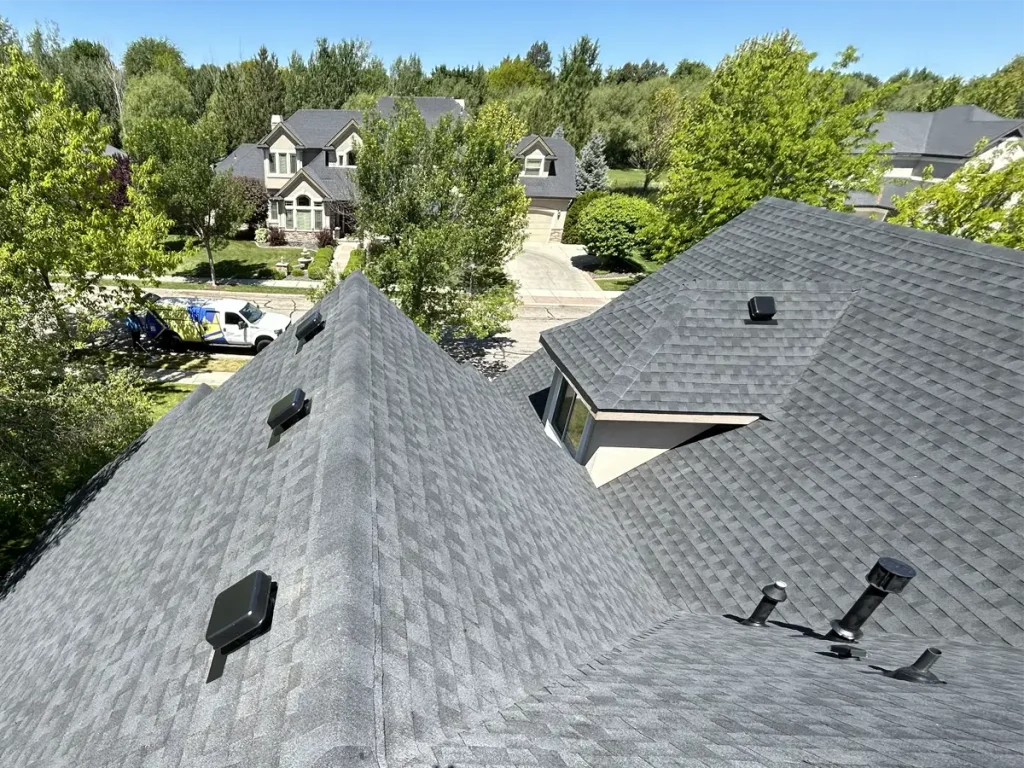
The number printed on the shingle wrapper is not the number your roof will live. That wrapper was written for a laboratory, and your roof lives in Central Florida. In Sumter County heat, humidity and storm season, three-tab shingles realistically run about 12 to 18 years, architectural shingles 20 to 30, and metal 40 to 70. The same products in Ohio or Pennsylvania routinely go a decade longer. Florida is simply the hardest place in the country to be a roof, and the sooner you plan around that, the cheaper your roof gets to own.
We put hands on hundreds of roofs a year across Bushnell, Webster, The Villages and the surrounding counties, so the numbers below are not manufacturer marketing. They are what we actually find when we climb the ladder.
What each roof type really gives you here
Three-tab shingles are the budget option, and they show it in wind. The single-layer tabs catch gusts, the sealant strips let go early, and by year twelve most three-tab roofs around here are shedding tabs every time a storm line rolls through. If your home wears three-tab and it is past its tenth birthday, put it on a watch schedule.
Architectural shingles are the workhorse of Central Florida roofing, and for good reason. The laminated double layer is heavier, grips better in wind, and carries real ratings when it is installed to Florida code. A well-installed architectural roof from the lines we carry gives Sumter County homeowners twenty-plus years when the attic under it is ventilated properly. Starve it of ventilation and you can lose five to eight of those years, which is a expensive thing to lose to a fifty-dollar vent problem.
Metal is the long game. A standing-seam or rib-panel metal roof shrugs off the UV that cooks shingle mats, sheds water instantly, and holds through wind that strips shingle fields. Forty years is a conservative floor for a properly fastened metal roof here, and many go decades past it with basic maintenance.
Why Florida shortens every lifespan
Three forces work on your roof at once. First, UV. Our sun exposure is relentless, and ultraviolet light breaks down the asphalt binders in a shingle mat until the granules that protect it wash into your gutters. Second, thermal cycling. A July roof deck can swing eighty degrees between afternoon and midnight, and that daily expansion and contraction works every fastener and every sealant strip. Third, wind and driven rain. June through November, storm cells test every edge, valley and flashing on the roof, and they only need to win once.
Humidity piles on top of all three. Moisture rides into the attic, condenses on the underside of the deck when the AC runs, and quietly ages the wood that holds your fasteners. That is why two identical houses with identical shingles can be years apart in roof condition: the one with balanced attic ventilation dries out, and the other one does not.
The signs that matter more than the birthday
We judge roofs by condition, not age, and you can read most of the early signs from the ground. Curling or cupping tab corners mean the mat is drying out. Granules collecting in gutters and at downspout splash blocks mean the protective surface is leaving. Shiny or black patches on a slope mean the granules are already gone there and the mat is taking sun directly. Exposed or backed-out nail heads mean movement, and movement means water paths.
Inside the house, watch ceilings and closet corners for faint tan stains, and get into the attic with a flashlight twice a year. Daylight through the boards, rusty nail tips, or insulation with dark water tracks are all early warnings that beat waiting for a drip.
What honest maintenance buys you
A roof is not a set-and-forget purchase, and small money spent early is the whole secret to cheap ownership. Keeping gutters clear stops water from backing up under the first course. Trimming limbs off the roof line removes the abrasion that wears granules in stripes. Replacing a cracked pipe boot for modest money beats the interior repair that a season of slow leaking causes. And a real repair done at year twelve routinely buys an architectural roof five more good years.
When repair stops making sense
There is a point where patching is throwing good money after bad, and an honest roofer tells you when you reach it. Our rule of thumb: when repairs start recurring on different slopes, when the mat is brittle enough that walking it causes damage, or when a repair would cost more than a fifth of a replacement, it is time to talk about the whole roof. What we will not do is sell you a replacement while your roof still has honest years left. That is how a 4.9-star rating gets built in a county where everyone knows everyone.
Insurance has an opinion about your roof’s age
Florida carriers have gotten strict. Many now inspect or ask for roof documentation at renewal, and a roof past fifteen years can trigger non-renewal threats or forced replacement timelines whether or not it leaks. Knowing your roof’s real condition, in writing with photos, gives you something to answer them with. It has saved more than one of our customers from replacing a roof that had plenty of life left, purely because the carrier was guessing from an aerial photo.
How we date a roof nobody has records for
Half the roofs we inspect come with no paperwork at all: the house has changed hands twice, the permit trail is thin, and the seller’s best guess is a shrug. A roof still tells its age if you know where to look. Shingle style narrows the decade, since manufacturers retire lines and colors on a known schedule. The number of layers tells a story, because a second layer nailed over the first was legal here in eras it no longer is. Boot styles, drip edge profiles, and even the nails themselves date the work the way tree rings date a tree.
Inside the attic, the deck finishes the picture. Plank decking says one era, oriented strand board another, and the pattern of old repairs says how the roof has been treated between them. We put all of it together into a real age estimate with photos, which is exactly the documentation an insurance carrier or a buyer wants to see instead of a guess.
The renter and starter-home trap
A word about the three-tab roofs that cover so many rentals and starter homes around Bushnell and Webster: they are usually the oldest roofs on the street precisely because nobody has been watching them. If you have just bought one of these homes, or you own one you rent out, assume nothing about the roof until it is inspected. A landlord who spends on a small repair this year is a landlord who does not lose a tenant’s ceiling, a month of rent, and an insurance argument next summer. The math on early attention is even better on a rental than on the home you live in.
What to do at year fifteen
If your roof is past fifteen, or you do not actually know how old it is, get eyes on it. Our roof check is free: we walk the roof, the attic when it is accessible, and the flashing and gutters, photograph everything, and hand you a straight written answer. Sometimes that answer is a small repair. Sometimes it is a plan for a replacement two years out, budgeted instead of panicked. Either way you know where you stand, and it cost you nothing but twenty minutes.
See the kind of work we do in the gallery, then call the owner at (352) 457-4472 or book your free roof check online. Straight answers, written numbers, and a roof that outlasts the paperwork.